
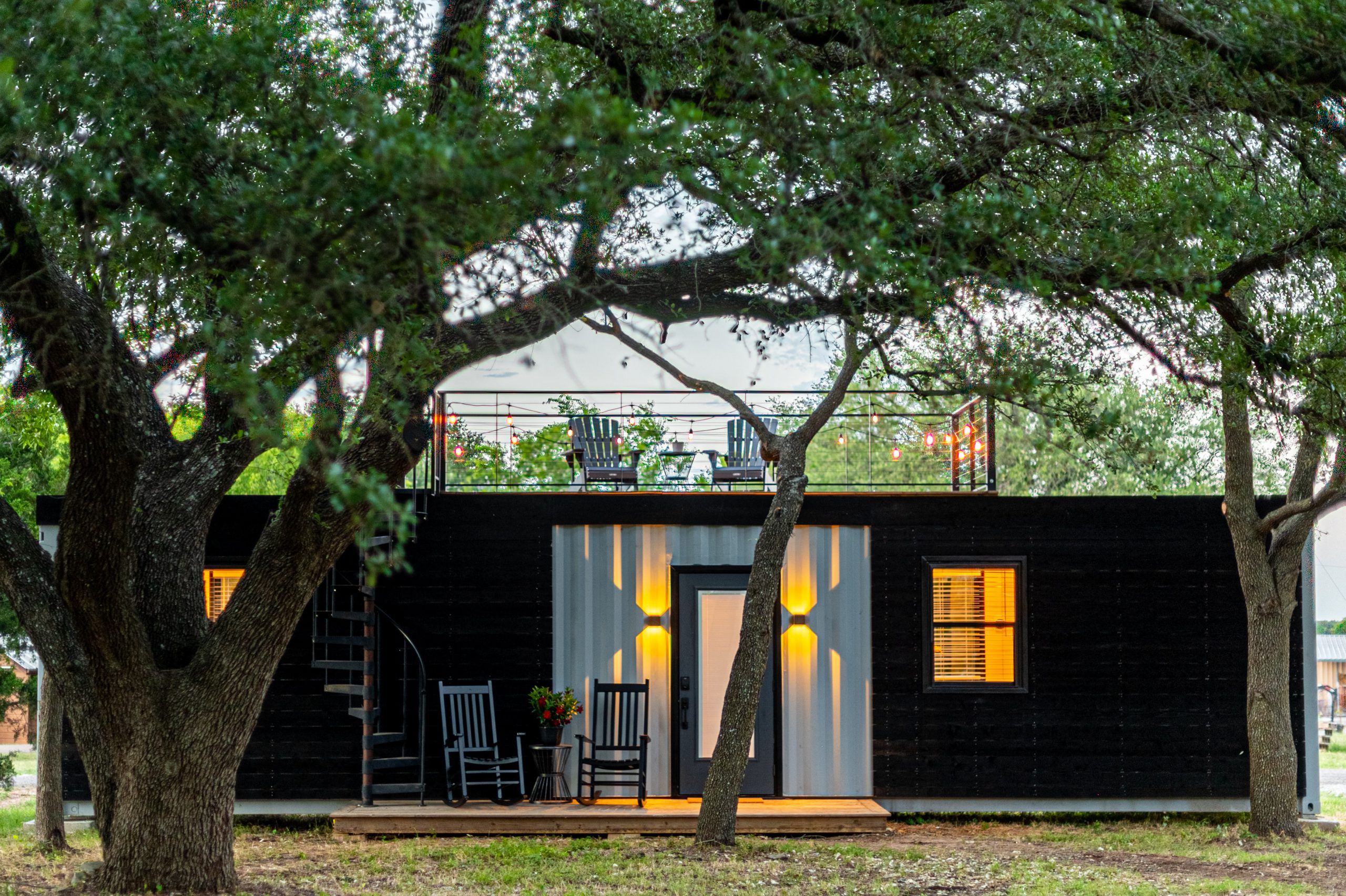
The tiny-house movement (also known as the small house movement) is an architectural and social movement that advocates for downsizing living spaces, simplifying, and essentially “living with less.” According to the 2018 International Residential Code, Appendix Q Tiny Houses, a tiny house is a “dwelling unit with a maximum of 37 square metres (400 sq ft) of floor area, excluding lofts.” While tiny housing primarily represents a return to simpler living, the movement was also regarded as a potential eco-friendly solution to the existing housing industry, as well as a feasible transitional option for individuals experiencing a lack of shelter.
This distinction is important as many people look to place tiny houses on empty lots, however if a tiny house lacks any one of the necessary amenities required for a dwelling unit then it is an accessory structure and must be placed on the same lot as a primary structure per the 2018 International Residential Code. There are a variety of reasons for living in a tiny house. Many people who enter this lifestyle rethink what they value in life and decide to put more effort into strengthening their communities, healing the environment, spending time with their families, or saving money.
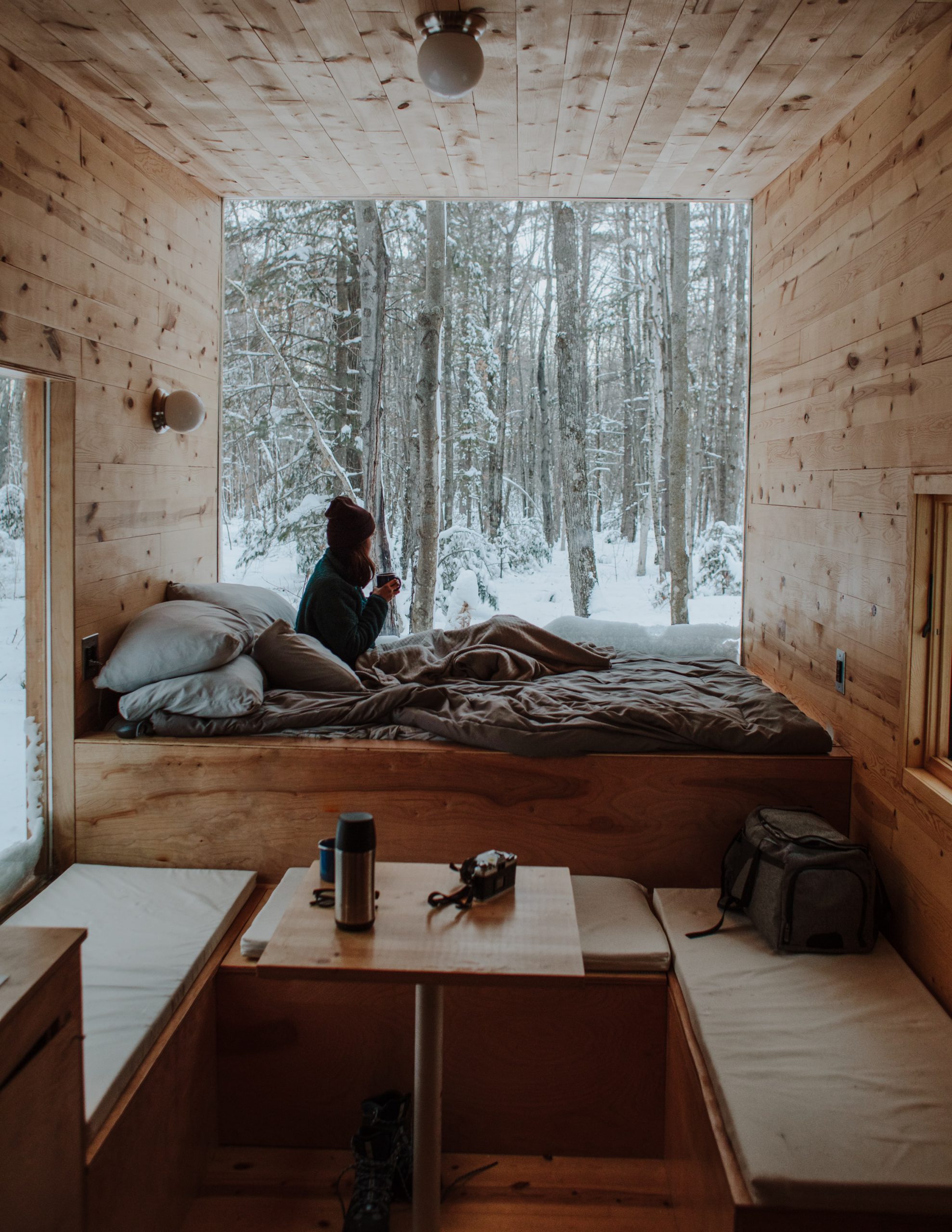
In the United States, the average size of new single family homes grew from 1,780 square feet (165 m2) in 1978, to 2,479 square feet (230.3 m2) in 2007, and further still to 2,662 square feet (247.3 m2) in 2013. Increased material wealth and individuals with high incomes are common reasons why home sizes increased.
The small house movement is a return to houses of less than 1,000 square feet (93 m2). Frequently, the distinction is made between small (between 400 and 1,000 sq ft or 37 and 93 m2), and tiny houses (less than 400 sq ft or 37 m2), with some as small as 80 square feet (7.4 m2).
Pros & Cons
In the co-authored research article The Psychology of Home Environments, it’s argued that the drive behind the tiny house movement is centered around desires of modesty and conservation, in addition to environmental consciousness, self-sufficiency, and wanting a life of adventure. In building tiny houses, there is often a misalignment between the needs of the occupant(s), and the expressed design from the creating team. This reality is used as a call for architects and design teams to work with psychologists to build tiny homes that are better suited towards the needs of the occupant(s). In understanding these considerations, it is important to note that not everyone is suited for a tiny house.
Smaller homes are less expensive than larger ones in terms of taxes and building, heating, maintenance, and repair costs. The lower cost of living may be advantageous to those with little savings, such as people aged 55 and older. In addition to costing less, small houses may encourage a less cluttered, simpler lifestyle, and reduce ecological impacts for their residents. The typical size of a small home seldom exceeds 500 square feet (46 m2). The typical tiny house on wheels is usually less than 8 by 20 ft (2.4 by 6.1 m), with livable space totaling 120 sq ft (11 m2) or less, for ease of towing and to exempt it from the need for a building permit.
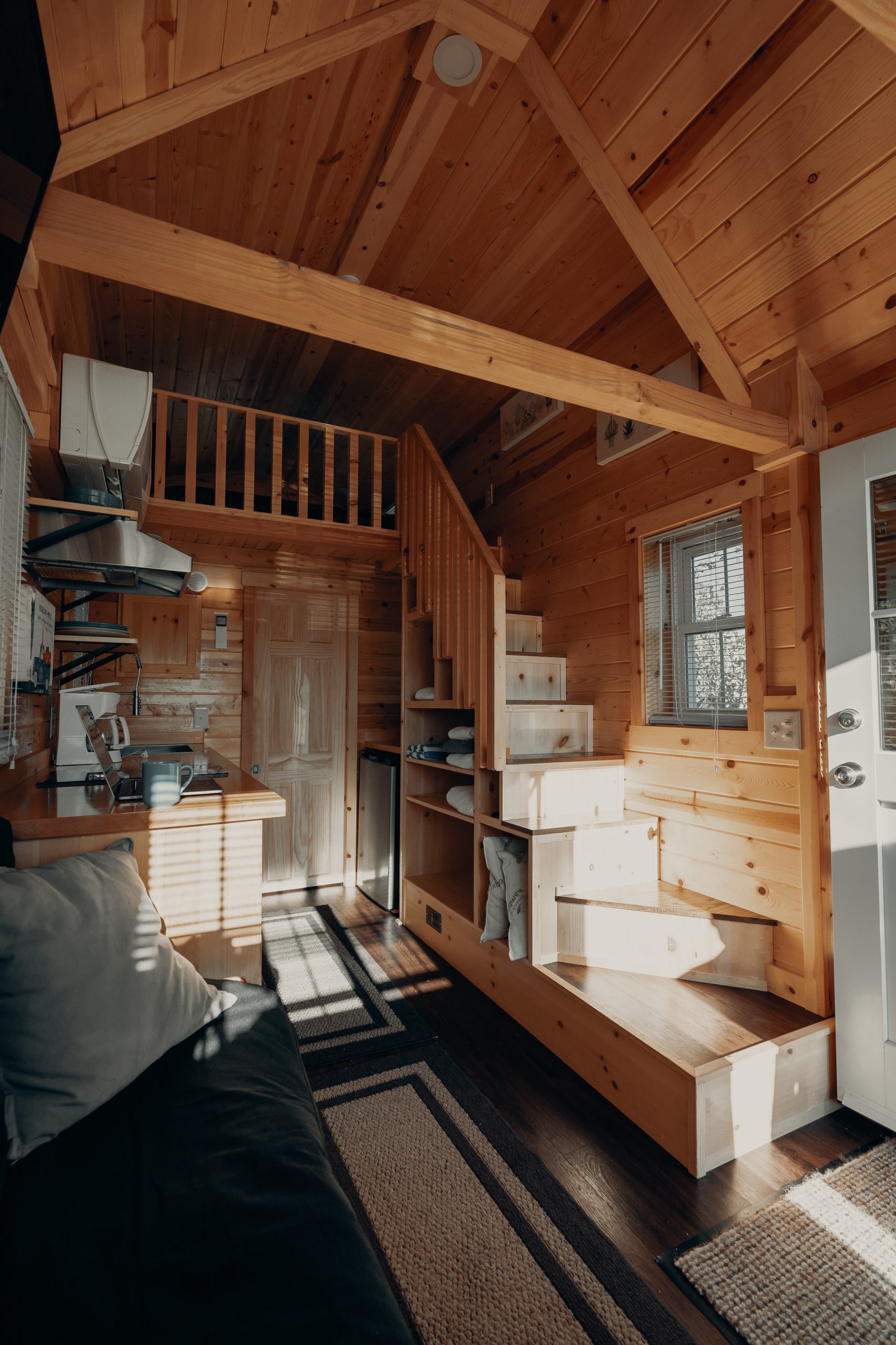
Small houses may emphasize design over size, utilize dual purpose features and multi-functional furniture, and incorporate technological advances of space saving equipment and appliances. Vertical space optimization is also a common feature of small houses and apartments. An example of this is the use of loft spaces for sleeping and storage. Because of overall height restrictions related to the ability to easily tow a tiny house, it is common for lofts to be between 3.3 ft and 5.5 ft (1.0m and 1.7m) inside height. Therefore, for accessibility of elderly and disabled people, larger floor plans that keep essential elements like bed, bathroom and kitchen on the main floor are more typical.
The increased utilization of small houses as second homes or retirement houses may lead to development of more land. People interested in building a small home can encounter institutional “discrimination” when building codes require minimum size well above the size of a small home. Also, neighbors may be hostile because they fear negative impacts on their property values and have concerns about increased taxes.
More broadly, these sentiments of “othering” homeless and unhoused persons have culminated into a broader movement of NIMBY-ism, or “Not in My Backyard.”
The advent of NIMBY-ism occupied much of community organizing and housing advocacy dialogue in the 1980s, so much that some coined it “the populist political philosophy of the 1980s.” In many ways, NIMBY philosophy functions through the “spatialization of stigma,” allowing residents and homeowners to reallocate and redefine neighborhoods and local communities and, consequently, which individuals should be allowed to occupy such an area. While modern U.S. society has statistically experienced a growing need for human services and welfare, researchers have acknowledged that “The stigmatization of persons and places are thus mutually constitutive of community rejection and organized resistance to human service facility sitting.” In effect, community resistance to housing advocacy and affordability measures further exacerbates the dwindling number of public resources and social services available to vulnerable and displaced homeless persons.
Concerns over the efficacy of tiny homes for homeless people persist. Some critics have argued that, similar to other forms of anti-homelessness legislation, tiny home villages are fundamentally carceral, designed to push its tenants into less public spaces near city outskirts in an effort to invisibilize homeless people, rather than provide long-term stability.
By treating homelessness as a non-familiarized issue, residents and homeowners are effectively exempt from community obligations towards the well-being and sheltering of other community members experiencing homelessness. Despite the framing of housing as a fundamental rights-based issue, community perspectives have evolved towards a more economic, individualized form that correlates a person’s home-ownership and housing to their values and ethics, employ-ability, and general ability to provide for themselves and their families. As such, the inability of both private and public sectors to supplement the widening gap of affordable housing options and shelter is, in some ways, conveniently explained by an individual’s supposed inability to ensure living stability, maintain financial independence, and solidify their position within the society at large.